
 Research For Life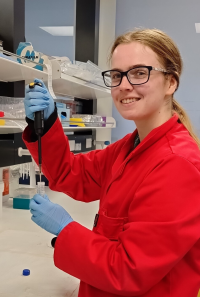
Wellington-based medical researchers have received up to $109,839 in Research For Life’s latest funding round.
Research For Life funds innovative quality research undertaken by researchers in the early stages of their careers who, through their work, will advance the quality of healthcare in the Wellington region and beyond.
This round saw six researchers receive research grants up to the value of $88,943 to undertake innovative medical research and eleven travel grants, totalling $20,896 to assist local researchers meet the cost of presenting their research findings at medical conferences.
The successful applicants for research grants were:
Zaramasina Clark and Sarah Szelecki
Dr Zaramasina Clark and Dr Sarah Sczelecki have received a Research for Life grant of up to $14,774 to investigate factors contributing to age-related infertility. Their research focusses on the theca cell layer of the ovarian follicle, which plays a critical role in the development and release of a mature egg during ovulation. This project investigates whether age-associated changes in ovarian tissue disrupt the function of theca cells, leading to ovulation failure, a known cause of infertility. Dr Clark is a Senior Lecturer and Dr Sczelecki is a Senior Research Fellow in the School of Biological Sciences at Te Herenga Waka-Victoria University of Wellington.
Katya Sellen (pictured)
Katya Sellen received a Research for Life grant of up to $16,555.17 to research a potential treatment for chronic neuropathic pain. Chronic neuropathic pain affects up to 10% of the general population and is a common side effect of chemotherapeutic drugs, but there is a lack of effective treatment options. Her research aims to find the effect of novel compounds targeting neuroinflammation and the restoration of myelin, the substance that wraps and insulates nerve fibres, allowing for effective impulse transmission. Katya is a PhD candidate at Te Herenga Waka Victoria University of Wellington.
Ula Earle and Bronwyn Kivell
Postgraduate research student Ula Earle and Associate Professor Bronwyn Kivell received a Research for Life grant of up to $19,196 to investigate how activation of a protein called the kappa opioid receptor (KOR) enhances remyelination and repair. Multiple sclerosis (MS) is the most common demyelinating disease of the central nervous system affecting over 4000 New Zealander’s. This research aims to identify the specific cell signalling pathways activated by KOR that drives an increase in the number of cells that produce myelin and enables functional recovery.
Andrea Teng and Kirsty Danielson
Dr Andrea Teng and Associate Professor Kirsty Danielson received a Research for Life grant of up to $17,312 to undertake research to help prevent stomach cancer. H. pylori is a bacterium that lives in the stomach, causing inflammation over a long period of time, and leading to stomach cancer in some people. Screening adults with no symptoms for H. pylori and treating infection is a proven way of halving the risk of stomach in high-risk populations. Blood testing may be an acceptable first step to screening, but information is needed on which testing kit is highly sensitive at detecting active infection but limits the number of false positives. Test performance varies between populations, so this study needs to be done in Aotearoa. Laboratory testing will measure the performance of three blood testing kits and use stool testing as the comparison. Blood and stool samples have been provided by individuals recruited from across Aotearoa. Dr Teng is an Epidemiologist and Public Health Physician at the University of Otago, Wellington with a research focus on preventing chronic disease. A/Prof Kirsty Danielson is Associate Dean (Research) and Head of the Department of Surgery and Critical Care at University of Otago, Wellington.
Ceridwyn Jones
Dr Ceridwyn Jones received a Research for Life grant of up to $5642 to undertake research to understand mechanisms driving heart attacks. Dr Jones will be supervising Biomedical Science Honours student Seungkwan Kim, who will explore neutrophil-mediated inflammation in blood samples from heart attack patients to understand the role of these cells in this disease. This work may highlight novel targets for future therapies. Dr Jones is Lecturer at the University of Otago, Wellington.
Anya Weth
Anya Weth received a Research for Life grant of $15,463 to support her work on the development of immunostimulatory compounds that can enhance the efficacy of vaccines. By strategically combining different molecules that stimulate complementary parts of the immune system, her work aims to generate stronger and more coordinated immune responses than current vaccine technologies. Ultimately, this approach should facilitate the development of vaccines against difficult respiratory diseases such as pneumococcal disease, pertussis (whooping cough) and tuberculosis. Anya is a PhD student in the Chemistry Department at Victoria University of Wellington.
The successful recipients of travel grants were:
Caitlin Dorset
Caitlin Dorset, a PhD student at the Malaghan Institute of Medical Research, received a travel grant of $4,527 to present her research on how the fungus, Aspergillus fumigatus, provides protection against influenza A virus at the Aegean Conference, “21st International Conference on Innate Immunity” in Crete, Greece this year. Caitlin has a strong interest in infectious disease, and her research has implications for novel vaccine adjuvants and host-directed therapies for influenza A virus.
Jun Chong
Jun Wei Chong is a BMedSc (Hons) student at the University of Otago, Wellington. She received a travel grant of up to $2,598 to attend the 94th Royal Australasian College of Surgeons (RACS) Annual Scientific Conference (ASC) which is held in Perth. She will present research that investigates myocardial injury after non-cardiac surgery (MINS) in patients undergoing vascular surgery. This study aims to evaluate the applicability of current MINS definitions in this high-risk population and to examine associated patient outcomes. These findings aim to inform whether routine perioperative troponin monitoring should be considered for patients undergoing vascular surgery.
Rosa Latton
Rosa Latton, a PhD student at the University of Otago, Wellington, was recently awarded a travel grant of up to $2,780 to fund her attendance at the 2026 European Human Genetics conference in Gothenburg, Sweden. She will be presenting results from her PhD research, involving whole genome sequencing of low grade serous ovarian cancer, a rare and under-studied ovarian malignancy. This exploratory work provides the most comprehensive characterisation of the low grade serous carcinoma genome to date. Rosa hopes to identify potential biomarkers of cancer progression and therapeutic targets to ultimately improve clinical outcomes for women affected by this challenging disease.
Jennifer Hill
Jennifer Hill, a Master's student at the University of Otago, Wellington, was awarded a travel grant of up to $400 to attend the Australia and New Zealand Society for Immunology local conference in Palmerston North. Jennifer’s research looks at how the immune system responds to viral infections, particularly Epstein-Barr Virus, and how this may influence the treatment of rheumatoid arthritis, an autoimmune disease, and its treatment responses. By improving the ability to predict who will benefit from different therapies, her work aims to support more personalised care for people living with arthritis. As a Master’s student, this conference offers a valuable chance to build networks and foster collaborative research for the beginning of her scientific career.
Pritika Narayan
Pritika Narayan, HF research fellow at University of Otago Wellington received funding of up to $548 to attend the CSANZ Annual Scientific Meeting held in Wellington. She will present her work on the Fiji Heart Study, a world-first genetic study of severe and premature coronary artery disease that occur independent of standard modifiable risk factors with striking patterns of familial clustering among Peoples of Fiji. The study has important implications for atherosclerotic cardiovascular disease risk assessment and early intervention for populations who are poorly represented in current genomic research and experience a disproportionately high burden of severe early onset disease, which is preventable with early diagnosis and intervention.
Aparna Menon
Aparna Menon, a Master of Biomedical Science student at the University of Otago, Wellington, received a $650 travel grant to present her research at the New Zealand branch meeting of the Australian and New Zealand Society for Immunology (ASI). Her research focuses on advancing scalable immunophenotyping by optimising whole-blood stabilisation protocols for high-dimensional spectral flow cytometry. This aims to enhance the efficiency of large-scale immune profiling studies, supporting translational research and biomarker discovery in clinical settings. As an early-career researcher, attending NZ-ASI will provide a valuable platform to present her findings and build professional networks, strengthening her future research trajectory.
Sabiha Hussin
Sabiha Hussin, a PhD student at the University of Otago (Wellington), has received a travel grant of up to $661 to present her research at the RANZCOG Annual Scientific Meeting (ASM) in Auckland. Her work examines the expanding role of non-invasive prenatal testing (NIPT) beyond screening for fetal aneuploidies. While NIPT is widely used for detecting common chromosomal conditions, recent technological advances have broadened its potential to screen for a wider range of clinical conditions. Through a scoping review and analysis of stakeholder perspectives, her research highlights both the opportunities and challenges of expanded NIPT, with a focus on supporting equitable, responsible, and personalised prenatal care.
Leigh Lauv
Leigh Lauv received a travel grant of up to $480 to attend the Australian and New Zealand Society for Immunology (ASI) NZ Branch Meeting in July. Leigh is pursuing her master's degree in Dr Robichon's lab and association with Awanui Laboratories, which focuses on improving laboratory testing for autoimmune neurological diseases. She is validating an international established screening method to help identify neuronal autoantibodies and support more confident diagnosis in New Zealand. Leigh is looking forward to sharing her work, receive input from immunologists and scientists, and establish connections across New Zealand to support her growth in translational neuroimmunology diagnostic.
Zoë King
Zoë King is a Doctoral Candidate at Victoria University of Wellington. She has been awarded a travel grant of up to $3,200 to attend the BacPath 2026 Conference held in Busselton, Australia. Her research focusses on the zoonotic pathogen, Bartonella henselae. During systemic infection, B. henselae can migrate to the liver an develop hepatic cysts. Zoë will be presenting her research on Bartonella pathogenesis: elucidating mechanisms which underpin cyst formation and persistence of bacteria in the liver environment. This has implications for understanding how bacteria can manipulate host cells to cause chronic infection and morbidity.
Khairina Khairul Anuar
Khairina Khairul Anuar, a PhD student at Te Herenga Waka – Victoria University of Wellington received a travel grant of up to $1,200 to attend the BacPath 2026 conference in Busselton, Western Australia. She will present her research on Bartonella quintana, a vector-borne bacterial pathogen that causes chronic bloodstream infections in humans. Her work focusses on how the bacteria inhibits our normal central signalling pathways - vital for launching a robust immune response. By suppressing these pathways, the bacteria can persist in the host bloodstream for extended periods. Because B. quintana has evolved methods to shut down host immune signalling, understanding this highly targeted immune interference will likely shed light on our immune system regulation.
Emma Chung
Emma Chung is a second year Master of Biomedical Science student at Victoria University of Wellington. She has received a travel grant of up to $2,600 to attend the BacPath 2026 Australian Society of Microbiology conference held in Busselton, Australia. Emma will be presenting work done in her Master’s project focussing on Bartonella quintana, a blood borne bacterial pathogen that causes chronic disease in humans. However, the mechanisms of virulence that enable B. quintana infection and persistence remain poorly understood. Her work aims to investigate interactions of B. quintana with the host through whole genome sequencing of clinical isolates to identify variable host interaction factors that may be implicated in B. quintana pathogenesis.
Emma Thompson
Emma Thompson, a PhD student at the University of Otago (UOW), has received a $720 travel grant to present at NZ ASI 2026 (Australian and New Zealand Society for Immunology, ASI) Annual Scientific Meeting in Palmerston North. She will present research that tracks perioperative platelet activation trajectories in patients with advanced atherosclerosis using a novel spectral flow cytometry assay. The work aims to identify perioperative windows of increased thrombotic risk; this is particularly relevant because thrombotic events remain common in this population and carry a high burden of thrombosis-related morbidity and mortality.
Connor Davis
Connor Davis, a first year PhD student at the University of Otago Wellington, has received a grant of up to $730 to cover travel to an immunology conference in Palmerston North. At this conferences, ASI-NZ 2026, he will present his research that investigates how the immune system responds to major surgery. The research aims to identify immune biomarkers that may predict poor recovery and will be presented to a range of trans- Tasman and international researchers. His research looks to provide clinicians with an early warning sign for poor recovery after surgery, hopefully facilitating earlier, targeted intervention for those patients most at risk. Presenting at an academic conference is a great opportunity to showcase research carried out in Wellington and grow Connor’s skills as an early career researcher.